A native Android app for apartment renters · Startup
RentChirp Android App - Startup

RentChirp helps people find affordable apartments through data-driven listings. On the same product I designed a property management dashboard for, I also designed the native Android app, this time for renters, not managers. The goal was to turn rent trend data into something a renter could actually use: a simple signal for when the price on an apartment was genuinely good, called the ChirpScore.
ROLE
UI/UX Designer
TIMELINE
6 Weeks
The Problem
User pain point
Moving is already stressful, and finding the "right" apartment adds to it. Renters searching by location, square footage, and price have no easy way to know whether a listing they've found is actually a good deal or just an average one.
Business impact
RentChirp's whole product is built on data. If renters never got that data in a form they could actually use, the app would not be worth much more than any other listings app.
THE CONSTRAINTS
This was a native Android build, developed alongside a parallel native iOS app led by a different designer on the team. The co-founders wanted both apps to feel nearly identical in design and flow, which meant every decision on Android needed to hold up as a shared pattern, not just a platform-specific choice.
Key Insights from Discovery
This was my first time designing for Android. I had always used an iPhone, so I had to lean on people I knew who actually owned Android devices to understand real platform conventions, gestures, and habits before I trusted my own assumptions.
I designed to Material Design guidelines from the start. Material has a sleek, structured layout with a flow that plays out smoothly on Android specifically, which made it the right foundation for an app centered on scanning and comparing listings quickly. Working inside a real, well documented design system for the first time was one of the best parts of this project, it gave me a structured way to make consistent decisions instead of guessing at spacing and component behavior on my own.
Before designing, I looked at how Zillow and Apartments.com handle the renter side of their apps, since those are the two most recognized names in the space and the ones RentChirp would realistically be compared against.
Zillow
Zillow's renter app leans on instant notifications, favorites, and a map-based search, with a Rent Zestimate as a rough starting point for whether a price looks fair. That Zestimate is the closest thing Zillow has to a pricing signal, but it's a static estimate, not something that tracks a trend over time.
Apartments.com
Apartments.com focuses heavily on filtering, commute time, 3D tours, and an All-In Pricing feature that shows the true total monthly cost including fees upfront. Strong on transparency at the listing level, but again, no feature that tells a renter whether the price trend on a unit is moving up or down over time.
Research Artifacts
The Final Solution
Account, plans, and supporting content
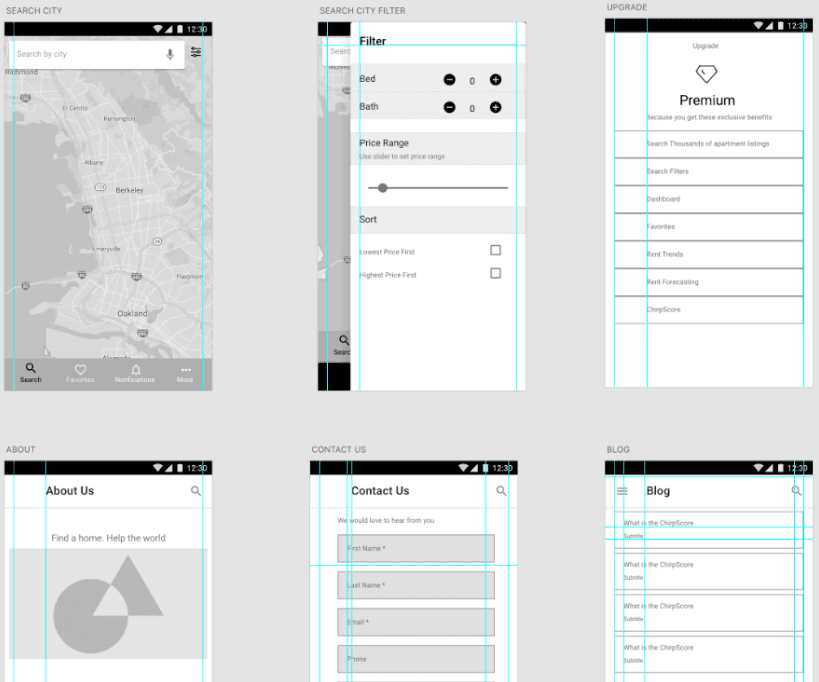
A full sign in and account flow, sign in, sign up, forgot password, reset password, built to Material Design guidelines for a native, familiar Android feel.
Free and Premium plans are clearly compared, with Premium listing exactly what a renter unlocks, including Search Filters, Rent Trends, and ChirpScore.
Search, filters, and ChirpScore
Renters search by city on a map, then narrow results with bed, bath, and price range filters, sorted from lowest to highest price.
ChirpScore is positioned as a Premium benefit alongside Rent Trends and Rent Forecasting, the feature that turns raw rent data into a signal a renter can actually act on.


